
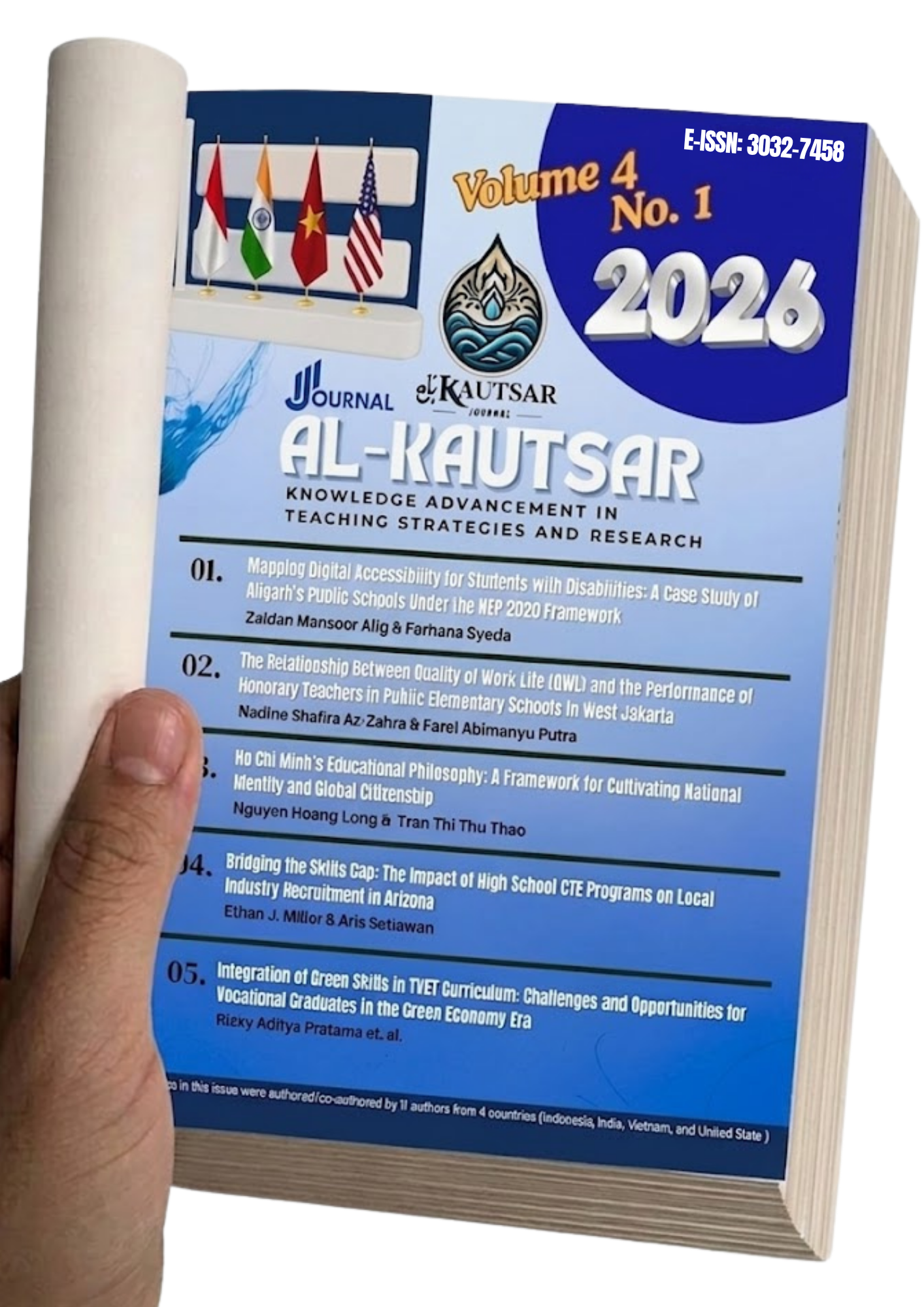
Ho Chi Minh's Educational Philosophy: A Framework for Cultivating National Identity and Global Citizenship
Article Sidebar
Main Article Content
Abstract
This study aims to explore Ho Chi Minh's educational philosophy as a strategic framework for balancing the strengthening of national identity and the cultivation of global citizenship awareness in Vietnam. Amidst the currents of globalization and digital transformation, the Vietnamese education system faces challenges in preserving local values while integrating international competency standards. Using a qualitative method through a Systematic Literature Review (SLR) from Scopus databases, this study analyzes the integration of "Hồng" (ethics) and "Chuyên" (expertise) principles within the 2018 General Education Curriculum. The results indicate that Ho Chi Minh’s philosophy provides a solid moral foundation through the "Trồng người" (growing people) concept, which aligns patriotism with international responsibility. Empirical data confirms that knowledge, skills, participation, and learning environment factors collectively explain 75.1% of the success of global citizenship training in Vietnamese universities. The study concludes that the adaptation of traditional values through a modern lens allows Vietnam to create a globally competitive generation without losing its national identity. Policy recommendations include updating humanities pedagogy and strengthening digital ethics in response to artificial intelligence challenges.
Article Details

This work is licensed under a Creative Commons Attribution-NonCommercial-ShareAlike 4.0 International License.