
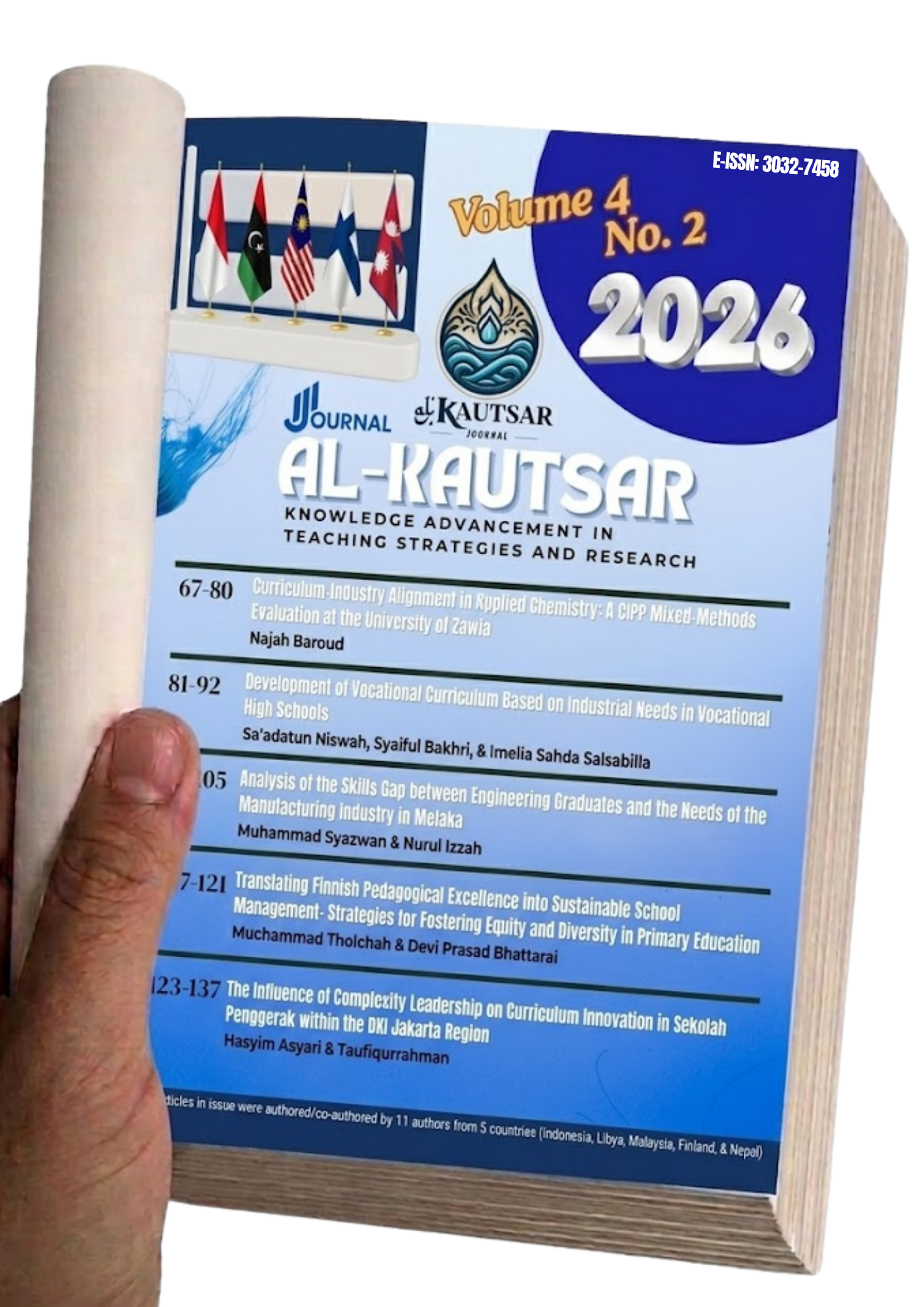
Curriculum–Industry Alignment in Applied Chemistry: A CIPP Mixed-Methods Evaluation at the University of Zawia
Article Sidebar
Main Article Content
Abstract
This study evaluated the alignment between the Applied Chemistry curriculum at the University of Zawia and the technical competency requirements of the Zawia Oil Refinery (ZOR) in Libya. Alignment evaluation is urgently needed because of the widening gap between traditional academic outcomes and the rapid digitalization of high-tech refinery operations. The research adopted an evaluative approach using an exploratory sequential mixed-methods design guided by Stufflebeam's CIPP model. Qualitative interview findings were used to develop quantitative questionnaire items to ensure methodological rigor. Participants included 15 faculty members and 10 senior technical experts from ZOR, selected through purposive sampling. Data collection occurred between 2024 and 2025 to reflect current industrial conditions. Quantitative analysis showed a moderate overall alignment (M=3.01, SD=0.71, 60.2%). The lowest scores were recorded in Process Simulation (M=2.41) and Digital Literacy (M=2.36), indicating that graduates lack critical proficiency in LIMS and simulation software like Aspen HYSYS required for modern refinery work. The study identifies structural weaknesses in laboratory modernization and internship quality. The most urgent recommendation is the establishment of an Industrial Advisory Board to facilitate the integration of industry-standard digital tools and practical training modules.
Article Details

This work is licensed under a Creative Commons Attribution-NonCommercial-ShareAlike 4.0 International License.